The Muscat issue
The wadi-and-sinkhole circuit: a cool-water counterpoint to Muscat's desert heat
Eleven cold-water stops between the coast road and the inland Sharqiyah, graded honestly by who they actually suit — coach groups, small parties, or a booked guide only.

By Bram VisserForts, wadis and the long way round
Muscat's heat closes the middle of the day down from May clear through September, and the practical answer to it sits forty minutes to two hours from the city, where the Hajar Mountains have spent millennia feeding a chain of wadis, a limestone sinkhole and one flooded canyon with cold, clear groundwater. This circuit strings together eleven stops along the southern coast road and inland toward the Sharqiyah desert — none of them theme parks, all of them real village or wilderness sites — graded here by who they actually suit, because the fastest way to have a bad day on this route is bringing a coach group to a spot built for four fit hikers, or the reverse.
The signature swim: Wadi Shab
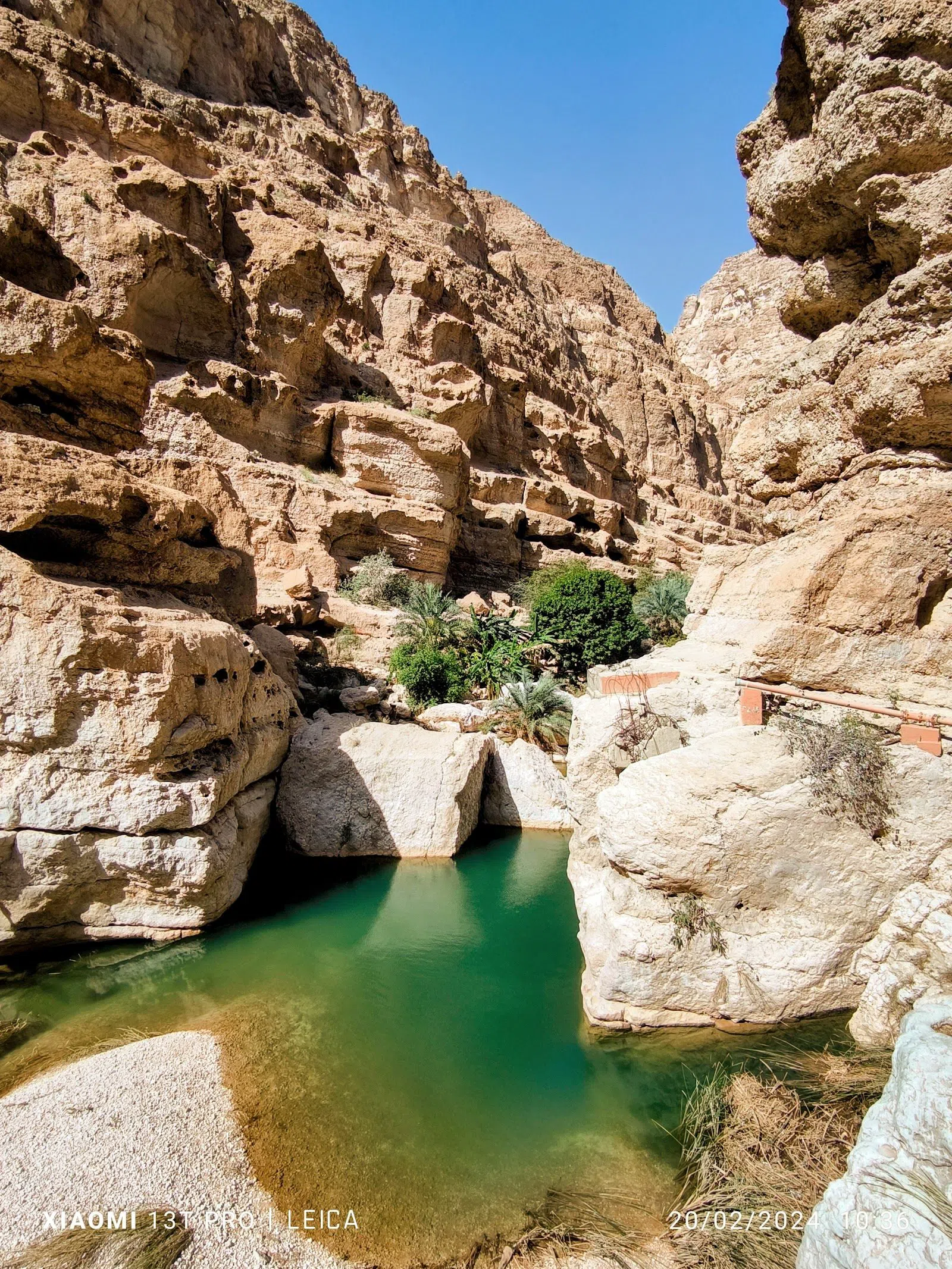
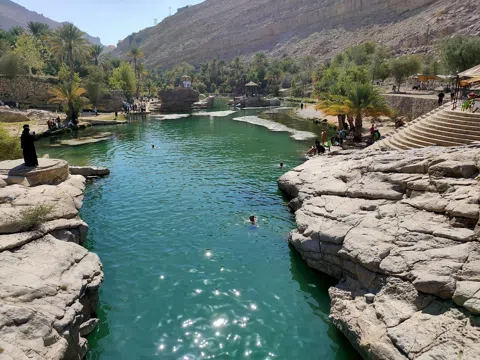
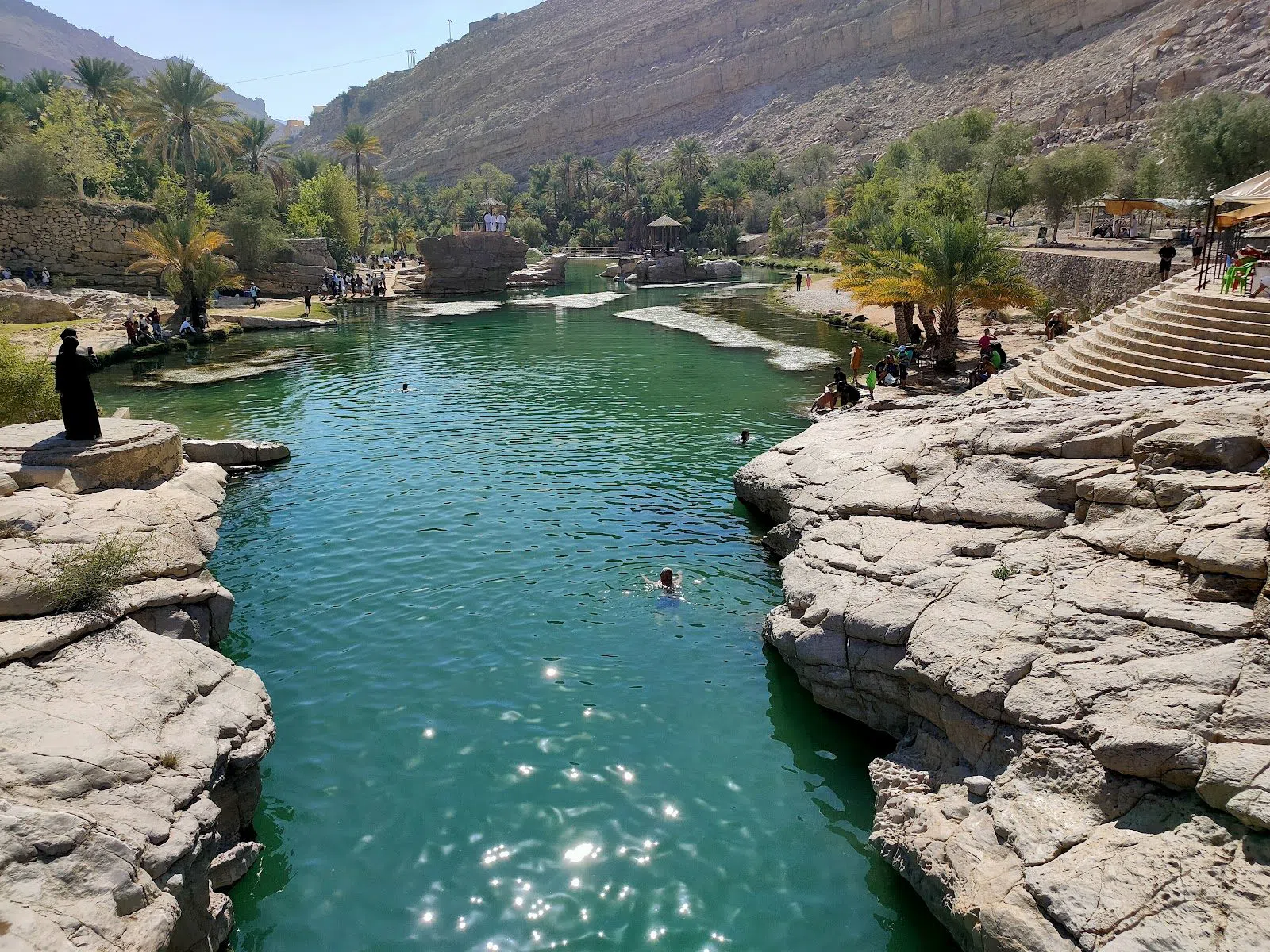
Wadi Shab (near Tiwi village, about 90 minutes south of Muscat on the coast road) is the wadi that ends up on every Oman brochure, for good reason: a short boat crossing, a 45–60 minute walk up a boulder-strewn canyon past turquoise pools, then a swim through a narrow rock slot into a cave with a waterfall inside it. The walk is not gentle — it's scrambling over rock in wet sandals for the best part of an hour each way — so it rules out anyone with limited mobility, but it takes tour-bus numbers well; the boat crossing (about 1 OMR, plus roughly 1 OMR park entry) and the marked trail are built for volume. The bottleneck is the boat queue at midday, when every operator's group arrives within the same hour. Go for the 7–8am boat if you want the cave to yourself; by 11am it's a queue at the water's edge.
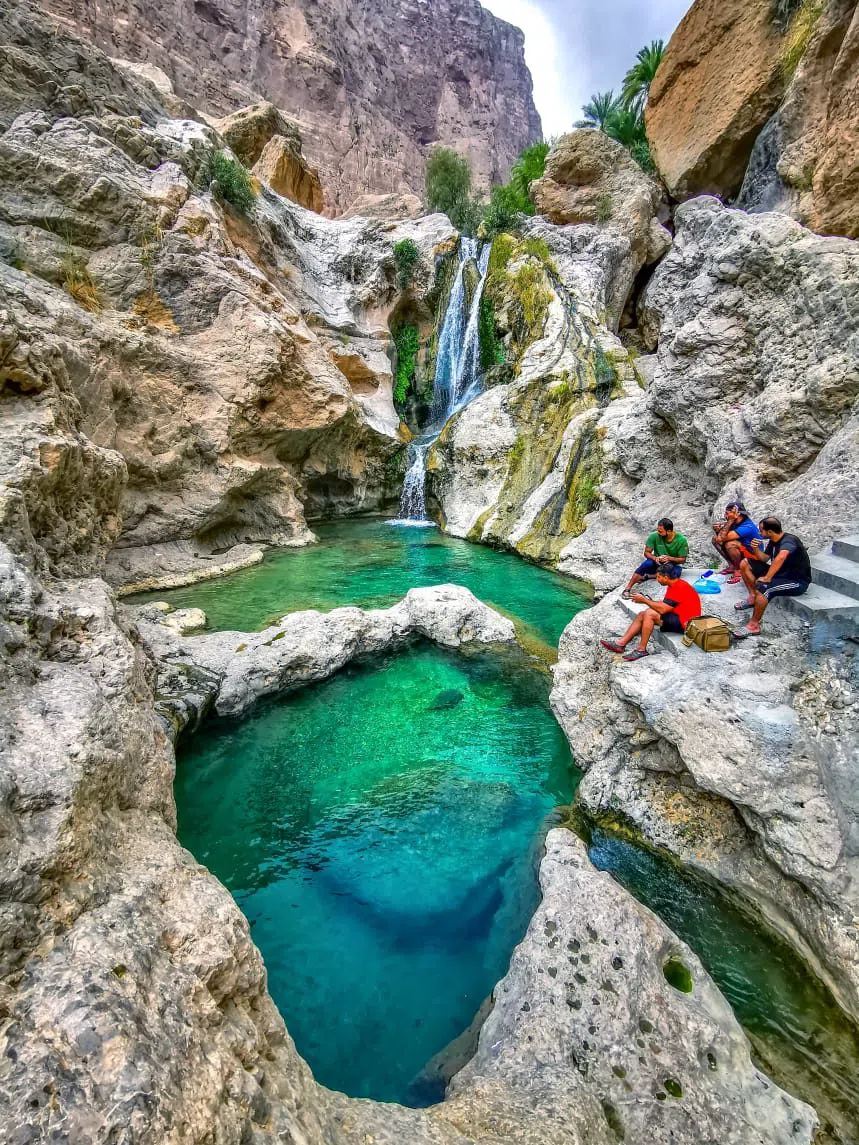
Wadi Tiwi (Mibam village, immediately next to Wadi Shab on the same stretch of coast) is the quieter alternative, and arguably the better half-day if swimming isn't the point. The drive-in road climbs through a strip of working plantations — mango, banana, date — into a stack of stone villages that predate the tourist trail by generations, and it's free to enter. The lower pools are an easy, flat walk suited to any group size; the deeper pools further up require boulder-hopping that's better kept to smaller, fitter parties. Most visitors treat it as the counter-programming to Wadi Shab: go to Shab for the postcard, Tiwi for the drive nobody else is doing.
Plan your Muscat trip
Live prices from our booking partners.
Free cancellation on many rooms. We may earn a commission when you book.
The coastal anchors: Bimmah Sinkhole and Fins Cave
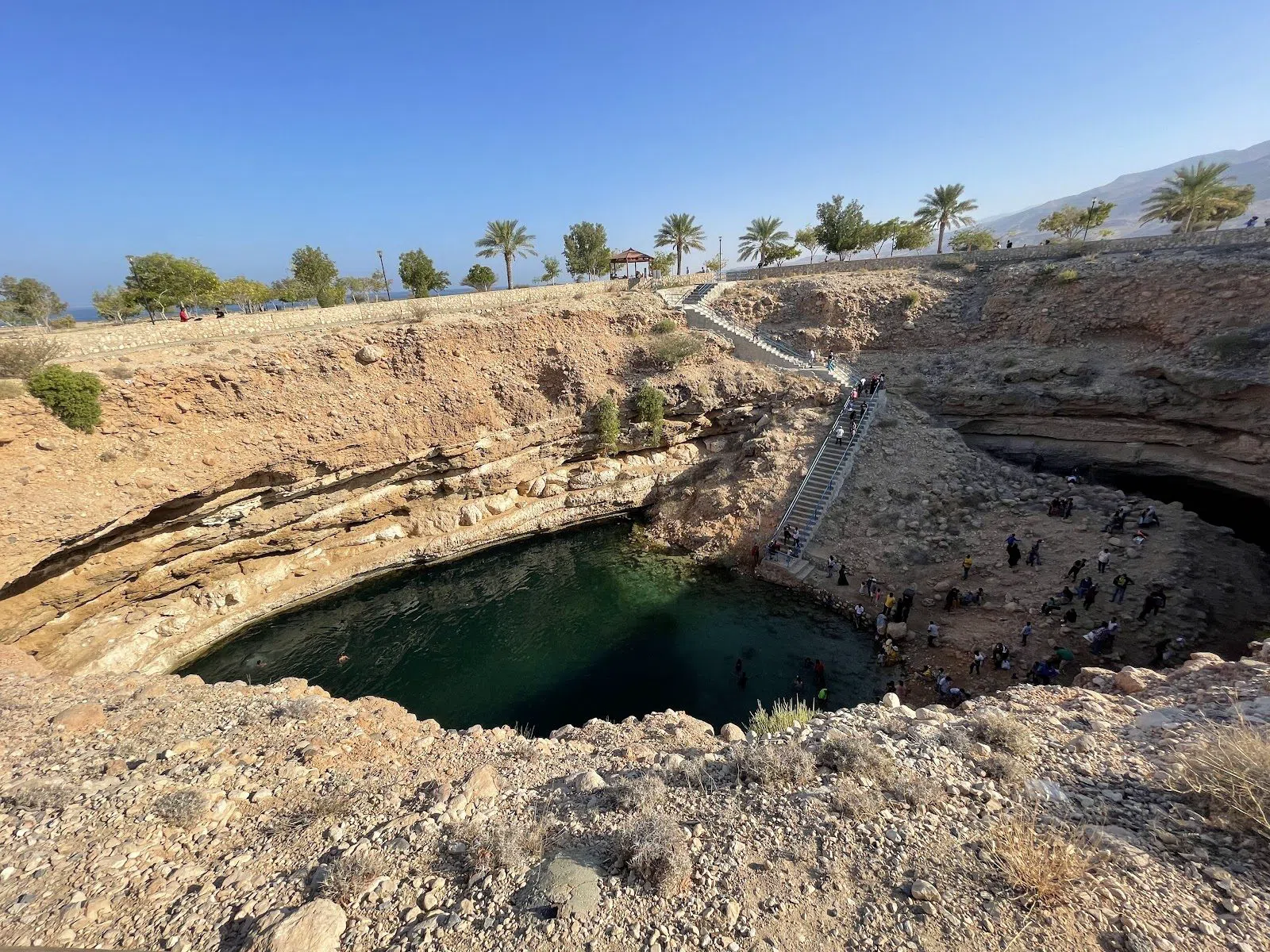
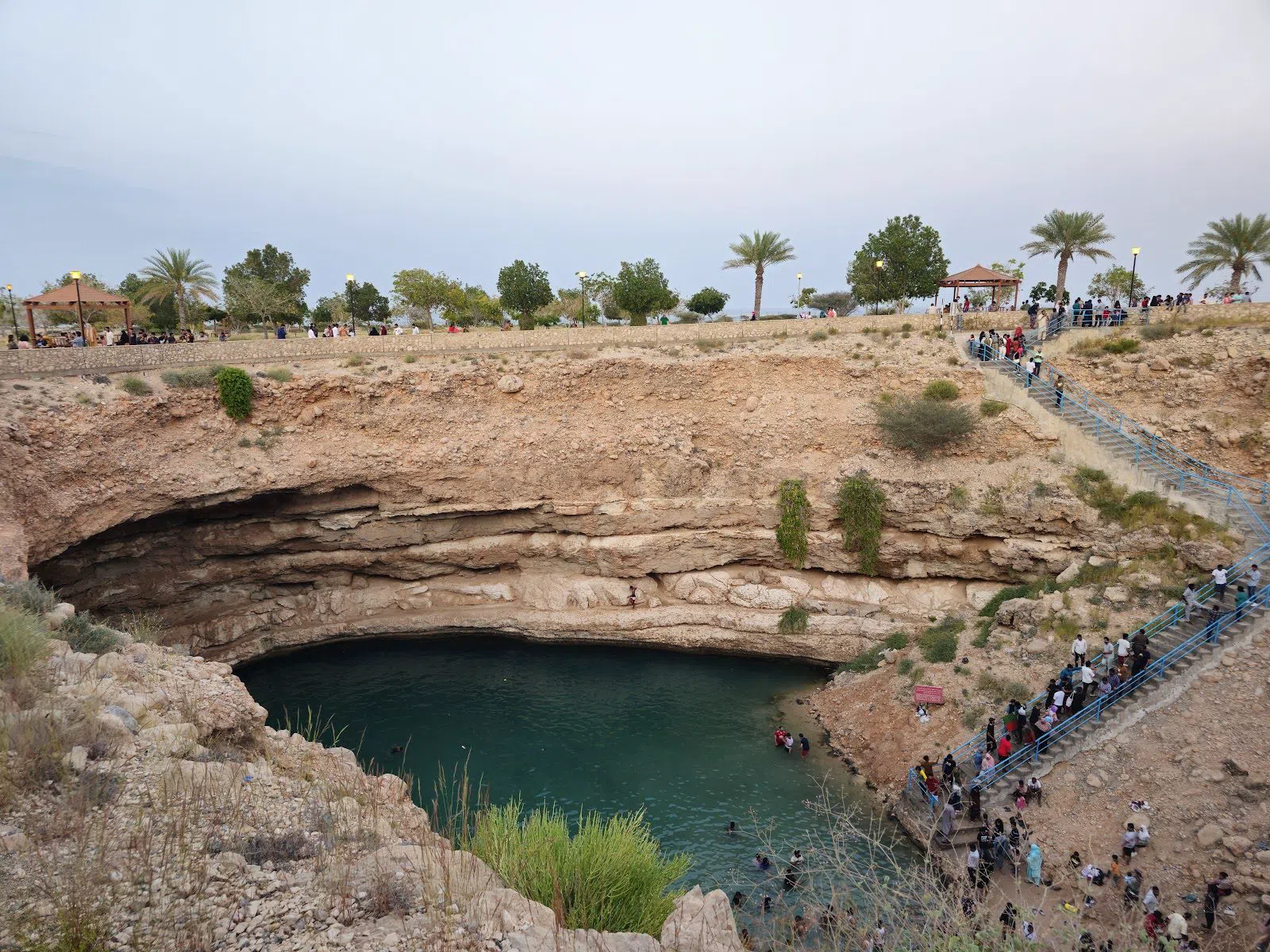
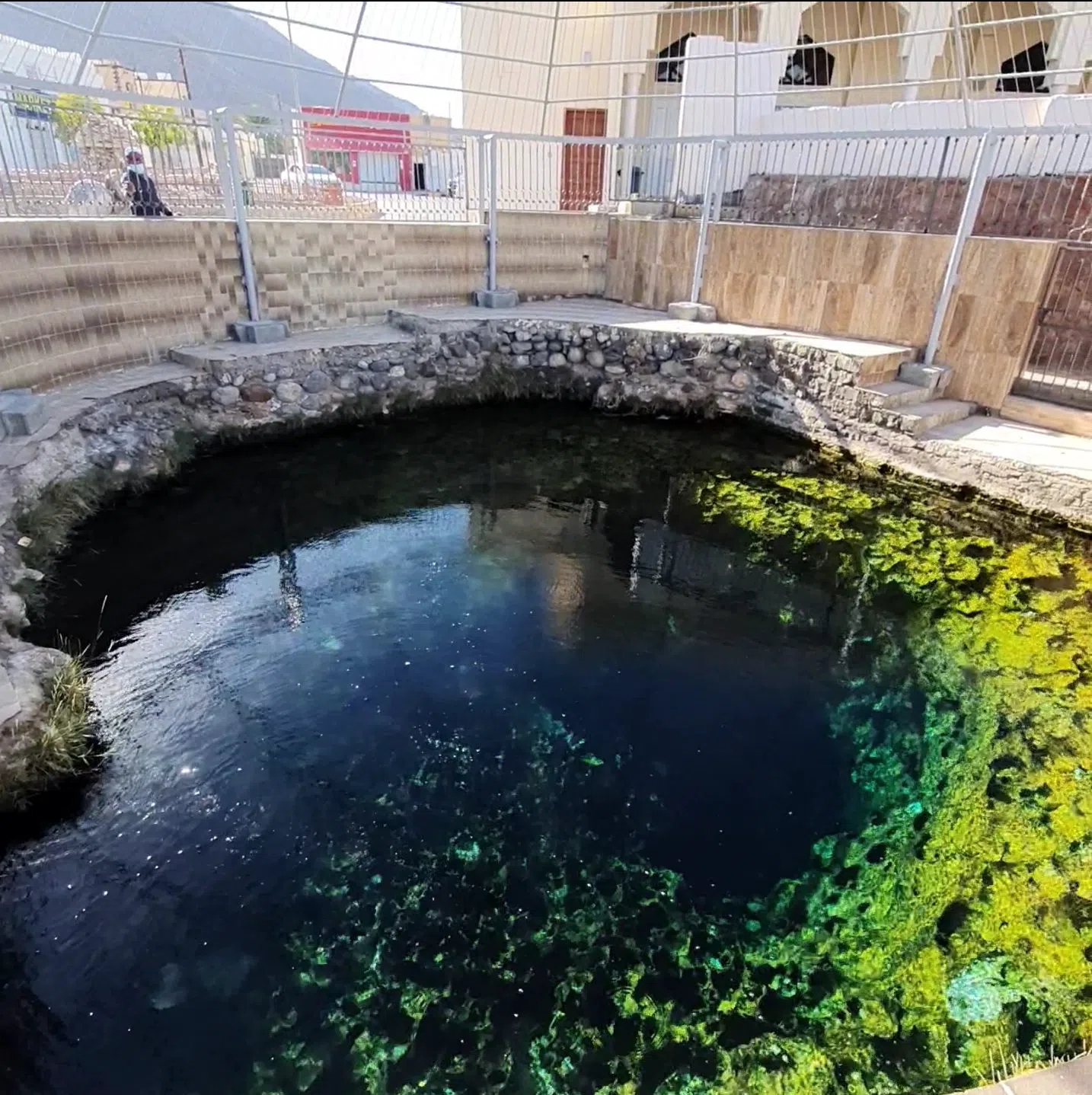
Hawiyat Najm Park, home to the Bimmah Sinkhole (just off the coast road near Bimmah village, roughly an hour south of Muscat), is the easiest stop on the whole circuit to manage as a group — paved steps down to the water, shaded seating around the rim, no booking required and no real cost beyond an occasional half-rial charge. It's also the most photographed water on this route: a collapsed limestone cavern filled with brackish, startlingly clear water, with small fish that will nibble at your feet if you sit still. The trade-off for the easy access is crowding — groups stop here on the way to or from Wadi Shab, so early morning or the last hour before sunset are the only realistic windows for water clear of other people's sunscreen.
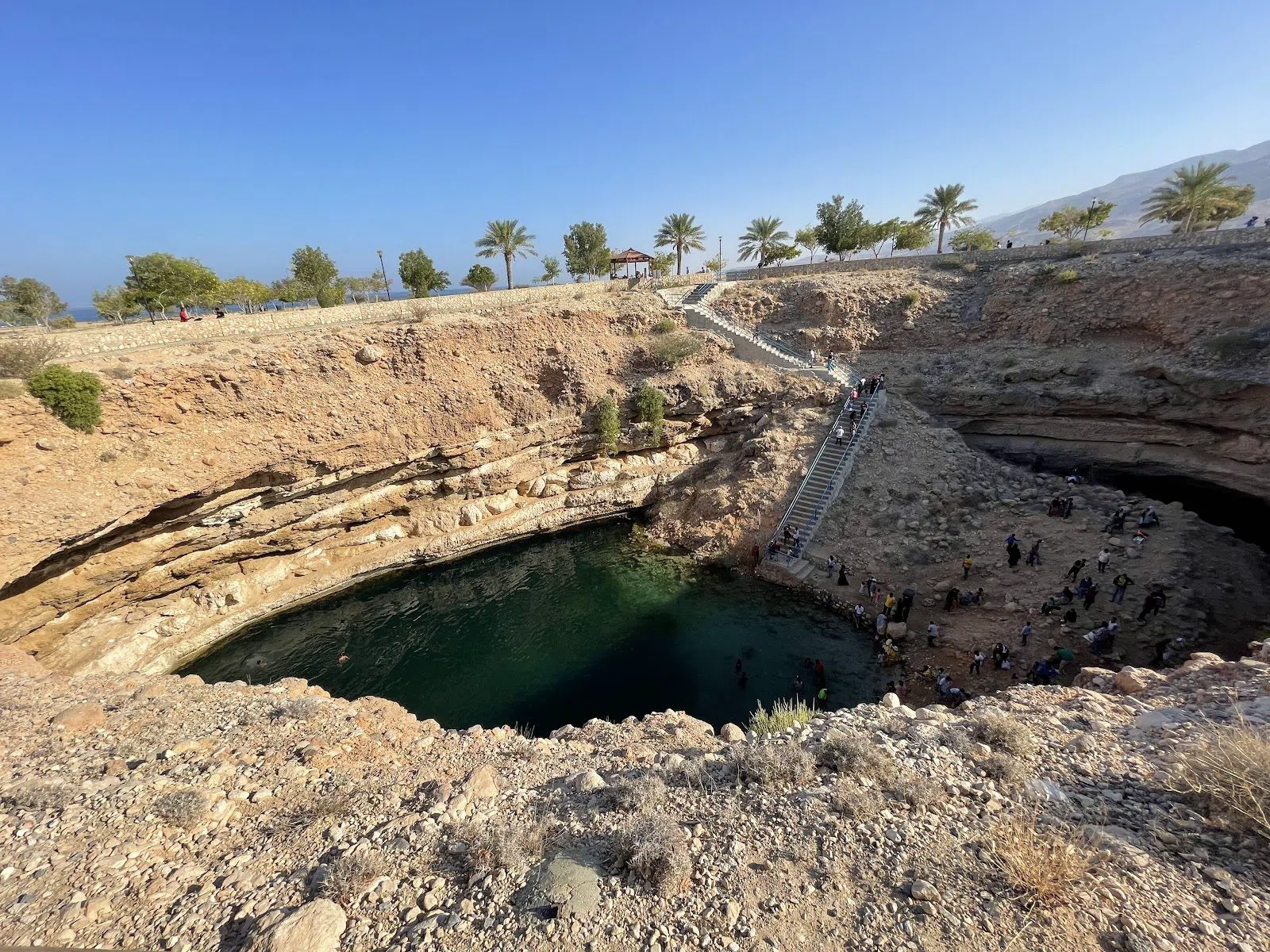
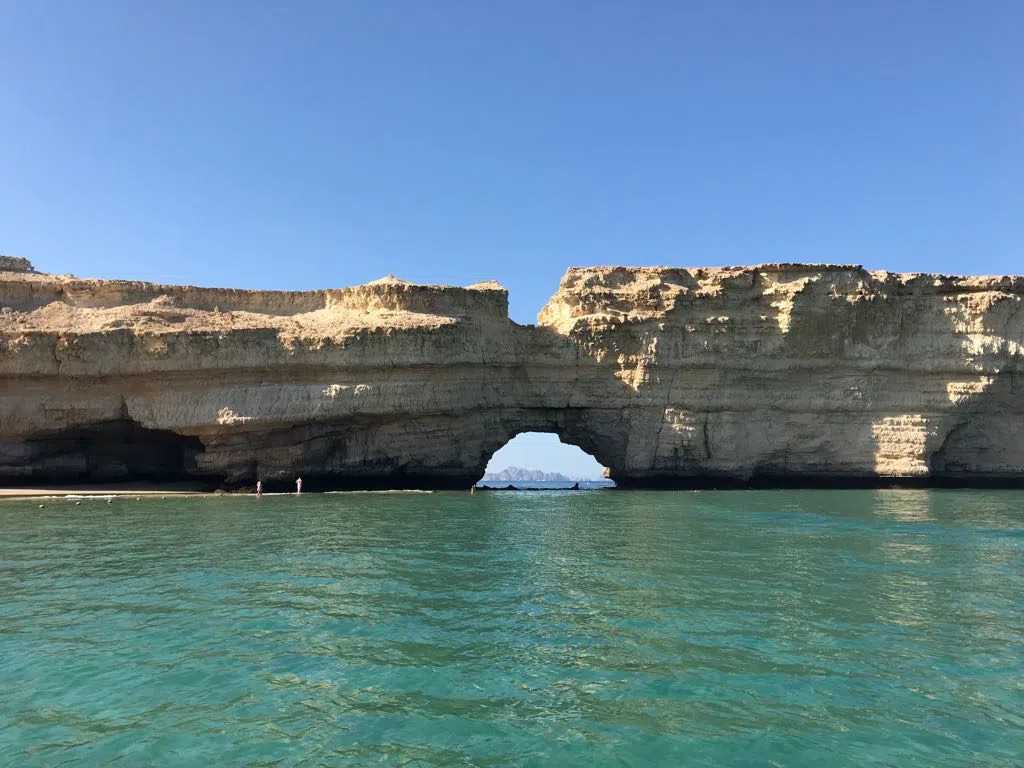
Fins Sinkhole Cave (roadside in Fins village, on the same coast road between Bimmah and Wadi Shab) is worth the five-minute detour precisely because most groups don't make it — a sea cave with a sinkhole opening, minimal signage and no facilities, so keep any group briefing short and check tide and swell before anyone swims through to the sea side. It photographs disproportionately well for how little effort it takes to reach.
Deeper into the mountains: Wadi Dayqah Dam and Wadi Al Arbeieen
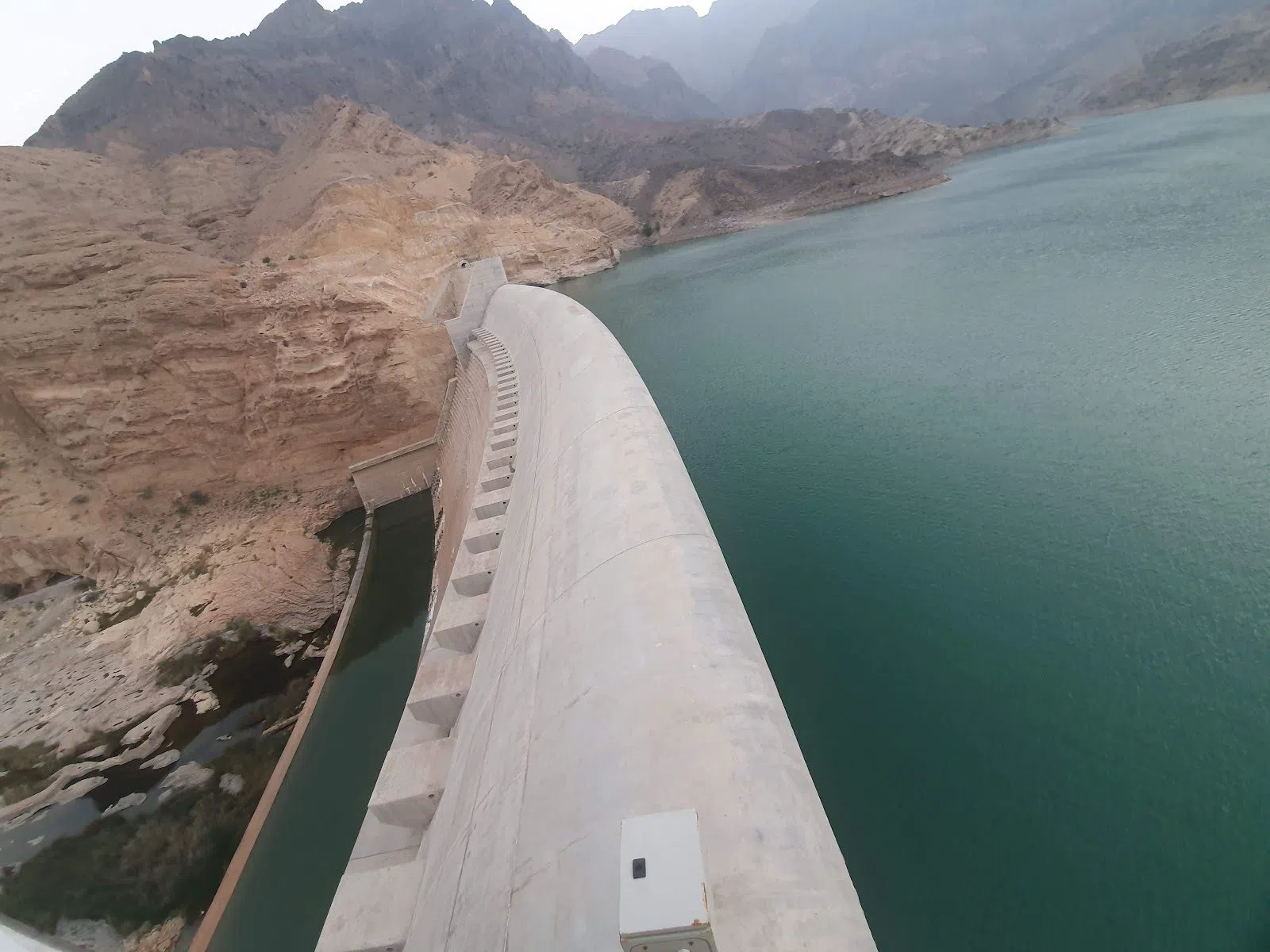
Wadi Dayqah Dam (inland off the coast road, about an hour south of Muscat) is the one stop on this list that isn't a wild swim — it's a purpose-built reservoir park with kayak and paddleboard sessions and a via ferrata route, running Tuesday to Sunday and bookable as a group unit. Entry runs around 1 OMR, with the day pass or kayak rental charged on top. It's the useful pacing break in a circuit day: after a scramble like Wadi Shab, a couple of hours on flat water with a paddle in hand resets everyone, and it's genuinely good for kids or non-swimmers who'd otherwise sit out the wadi hikes.
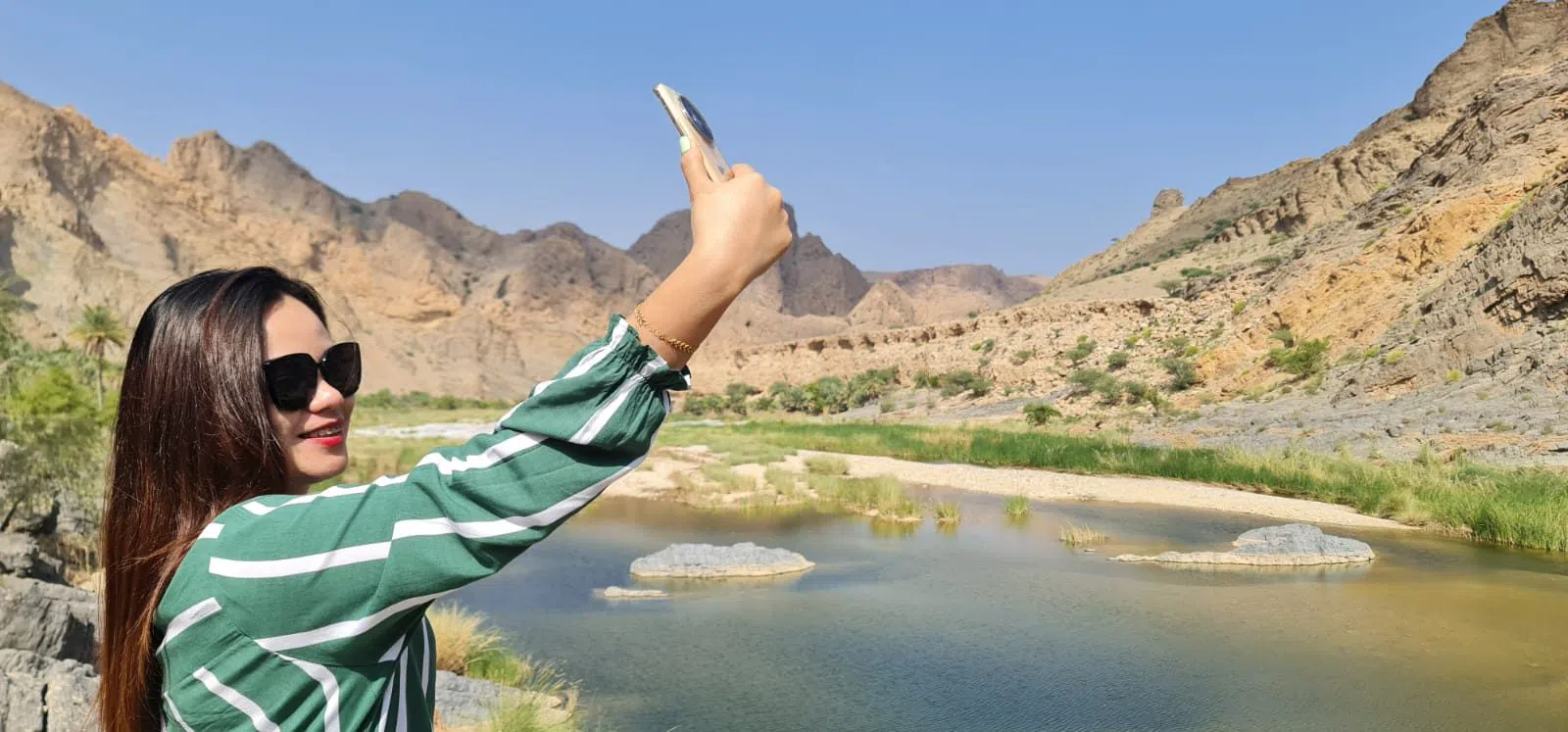
Wadi Al Arbeieen (inland in the Sharqiyah foothills, roughly two hours from Muscat) is the least-discovered waterfall wadi on the route, and it stays that way because the final approach is an unpaved track a rental sedan has no business attempting — this is a guided 4WD or hike trip, priced per operator, not a self-drive stop. Entry itself is free. The payoff for the rough approach is a pool that's often close to empty on weekdays, which nothing else on this list can promise in high season.
The full-day pairing: Wadi Bani Khalid
Wadi Bani Khalid (on the edge of the Sharqiyah desert, roughly two hours from Muscat) is the most group-friendly of the desert-edge wadis — tour groups run here daily, almost always paired with a desert-dune leg, and it's free to enter with only a small parking fee at some access points. The distance means it doesn't work as a standalone half-day from the city; treat it as the wadi stop bolted onto a wider desert itinerary rather than a circuit detour. One local courtesy matters here more than at the coastal wadis: swim in shorts and a t-shirt, not swimwear, out of respect for the village the pools sit beside.
For small, fit groups only: Snake Canyon
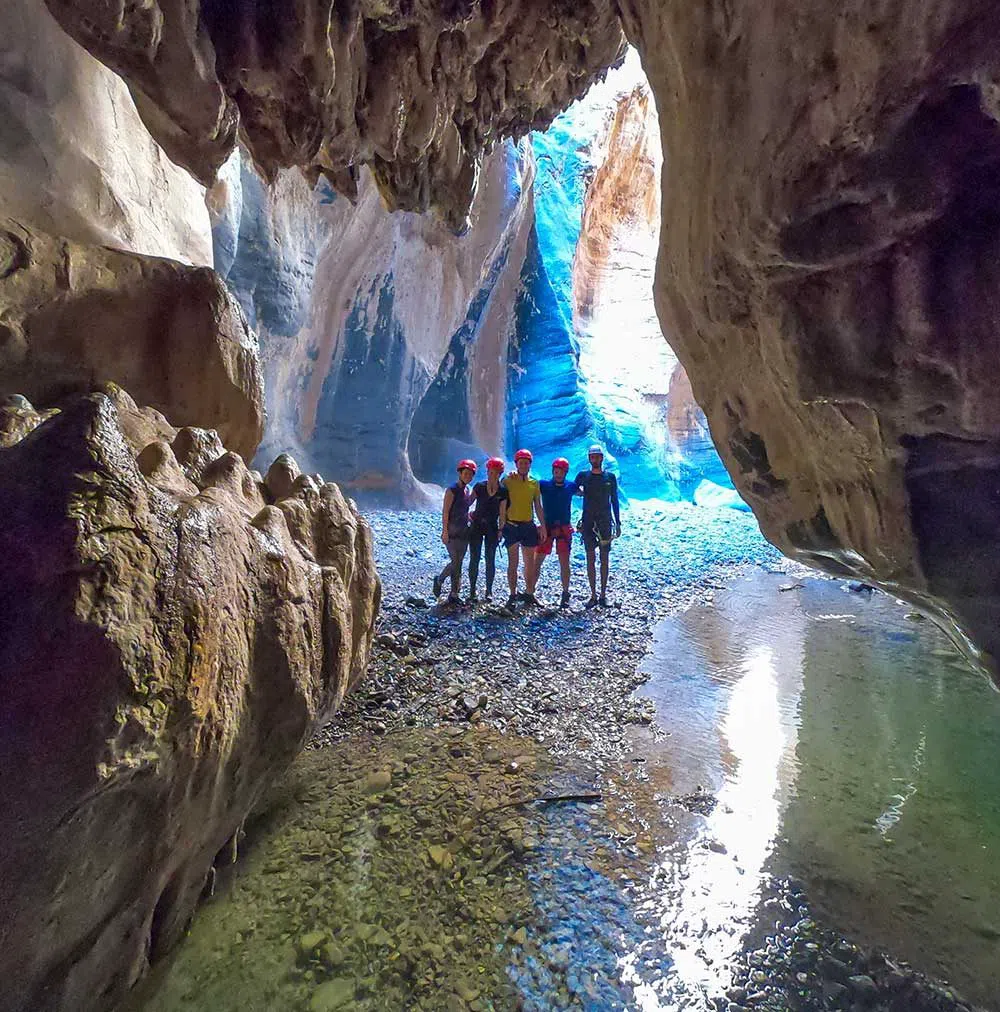
Snake Canyon, in Wadi Bani Awf in the Western Hajar range around two hours from Muscat, is the outlier on this list and should be flagged as such to anyone assembling a group day: this is a canyoning route — abseils, jumps, swims through narrow flooded sections — that requires a booked, certified guide, transport and gear as a full-day package, priced on booking. It is not a casual family stop like the rest of the circuit, and it isn't self-guided. For a small party with the fitness and swimming ability for it, it's the genuinely adrenaline-different entry on this list; for anyone else, it's worth knowing about and skipping.
Short on time: Wadi Mayh and Yiti Beach
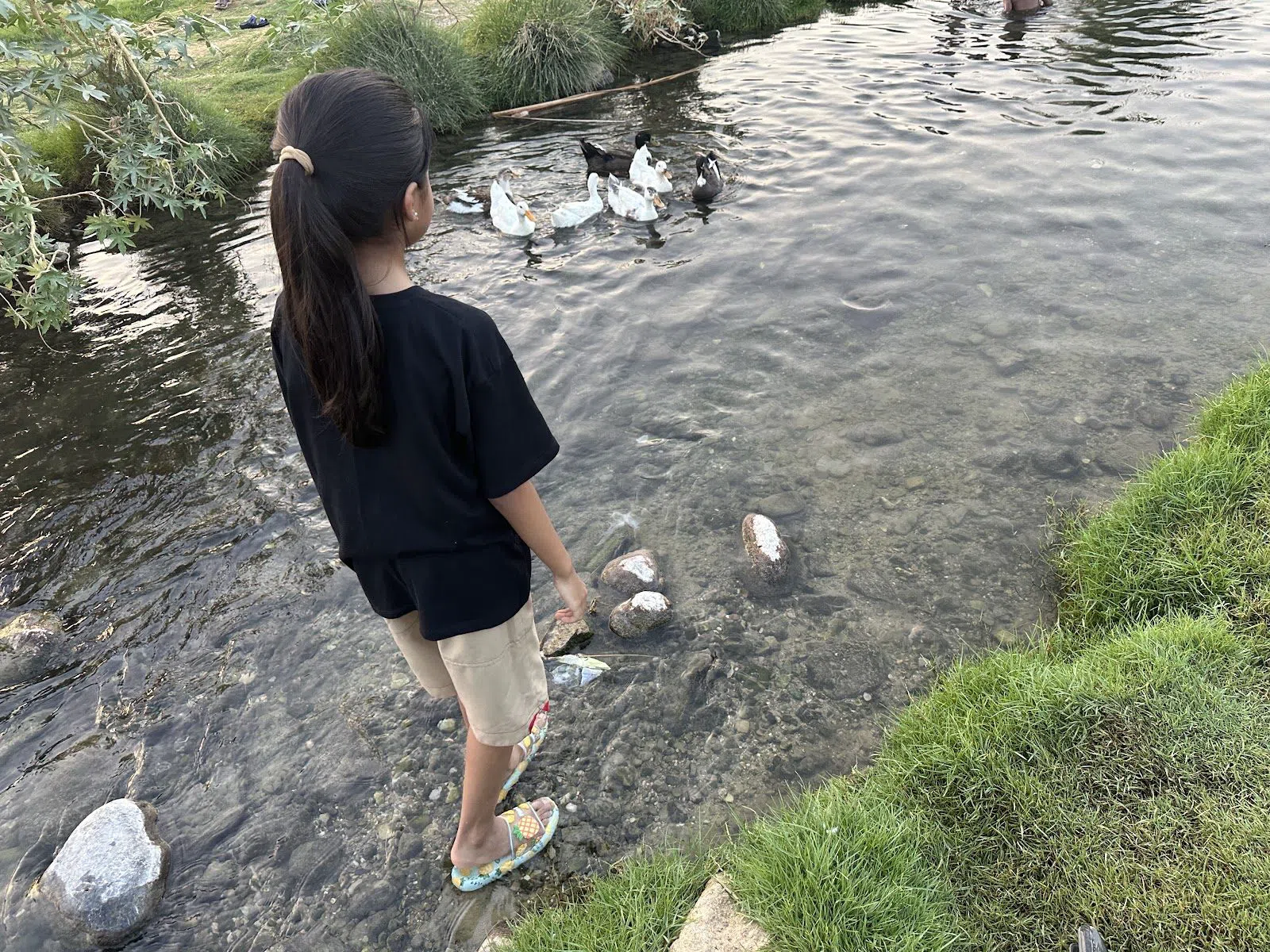
Wadi Mayh (about 20 minutes from central Muscat) is the convenience pick when a full circuit day isn't on the schedule — no permits, an easy walking track, and geology (folded, banded rock walls close enough to touch) that earns its place without a single swimming pool. It's free. Treat it as the "on the way" stop rather than a destination in its own right.
Yiti Beach (about 30 minutes from the city) isn't a wadi at all, but it's the closest cool-water bookend if the day needs a low-key finish rather than another hike — a casual, unticketed cove with no facilities and, importantly, no lifeguard, so bring shade and water yourselves and treat the surf accordingly. Better with kayaks or paddleboards brought along than any expectation of rental on site.
The warm-water counterpoint: Ain Al Kasfah
Ain Al Kasfah Hot Spring (further west, inland from Muscat toward the interior) inverts the whole premise — mineral-rich warm water instead of cold — and earns its place here as the half-day add-on for anyone extending the trip in that direction rather than sticking to the coast road. It's been recently redeveloped with cafés and expanded parking, so it now handles groups comfortably where it once didn't; entry is free, with a small fee for some pool areas.
Building your own circuit
Coastal loop, one day: Wadi Mayh on the way out, Bimmah Sinkhole and Fins Cave as short stops, Wadi Shab as the main event, Wadi Tiwi if there's daylight left. That's a realistic day with an early start and no rushing the boat queue.
Activity day: Wadi Dayqah Dam for kayaking, then Wadi Al Arbeieen or Snake Canyon if a guide is already booked — don't try to combine either of the latter two with a second stop; both eat a full day on their own.
Desert-and-wadi combo: Wadi Bani Khalid bolted onto a desert overnight, since the distance from Muscat doesn't justify the drive on its own.
Base yourself in the city and day-trip the whole circuit — see Muscat hotel search for where to stay, and the Muscat guide for the rest of the city beyond these wadis.
Practical notes
Getting there: every stop on this list except Wadi Mayh and Yiti Beach needs a car — there's no public transport network covering the coast road wadis. A 2WD rental sedan handles Wadi Shab, Bimmah, Fins, Wadi Tiwi's lower road, Wadi Dayqah Dam and Ain Al Kasfah; Wadi Al Arbeieen and Snake Canyon need a 4WD and, for Snake Canyon, a guide who provides the vehicle as part of the package.
Cash: entry fees across this circuit run roughly 0.5–2 OMR (about $1.50–$5) per stop, and small roadside operators — boat crossings, parking attendants — generally want cash, not cards. Carry small notes.
Timing: May to September, everything on this list is a dawn or dusk operation — arrive by 8am or after 4pm, and skip the midday hours entirely at Wadi Shab and Bimmah Sinkhole, where the heat and the crowds peak together. October to April, the same circuit works most of the day.
Budget: a coastal-loop day (Wadi Mayh, Bimmah, Fins, Wadi Shab) runs under 10 OMR per person in entry and boat fees, before a rental car. Wadi Dayqah Dam adds the day pass and kayak rental on top. Snake Canyon and guided Wadi Al Arbeieen trips are priced separately by the operator and typically run well beyond a self-drive day's cost — budget for a proper adventure-tourism package, not a wadi entry fee.
Before you go
What's the best time of day to visit Wadi Shab and Bimmah Sinkhole?
Before 8am or after 4pm. Both sit on the main coast road between Muscat and the Sharqiyah, so group traffic peaks mid-morning to early afternoon — arrive early for a clear boat queue at Wadi Shab and clear water at Bimmah.
Do I need a 4WD to do the Muscat wadi circuit?
Not for the core route. A 2WD rental sedan covers Wadi Shab, Bimmah Sinkhole, Fins Cave, Wadi Tiwi's lower road, Wadi Dayqah Dam and Ain Al Kasfah. Wadi Al Arbeieen's final approach and any Snake Canyon trip require a 4WD, typically supplied by a guide.
Which of these wadis is best for a family with young kids?
Bimmah Sinkhole and Wadi Dayqah Dam. Bimmah has paved steps and shallow shaded seating with no hiking required; Wadi Dayqah's kayak sessions suit non-swimmers and kids better than a scramble hike like Wadi Shab.
Is Wadi Bani Khalid worth visiting as a standalone day trip from Muscat?
Not really on its own — it's roughly two hours out, so it works best paired with a desert leg rather than as a solo half-day. If a desert overnight is already on the itinerary, it's an easy add-on.
Can I do Snake Canyon without a guide?
No. Snake Canyon in Wadi Bani Awf is a canyoning route with abseils and flooded sections that requires a certified guide, gear and transport booked as a full-day package — it isn't a self-guided stop like the rest of this circuit.